Category Archives: Urbania

La poésie de l’actualité/ Actualité de la poésie

Les poètes entretiennent des rapports contrastés, antagoniques avec l’actualité. Car l’évènementiel où tout s’accélère et se bouscule appelle surtout la narration, la dramatisation. À l’opposé, le poème convoque une suspension de la chronométrie, de la datation : le poème exige l’espace de la réflexion où le temps se dédouble dans l’intériorité de la matière et plus encore dans le corps du poète. C’est pourquoi l’actualité ravit le romancier (chez Marcel Proust), mais rembrunit le poète. « J’ai eu l’impudence de lire ce matin, écrit Charles Baudelaire, quelques feuilles publiques ; soudain une indolence du poids de vingt atmosphères, s’est abattue sur moi, et je me suis arrêté devant l’épouvantable inutilité d’expliquer quoique ce soit à qui que ce soit ».

Gravité du temps
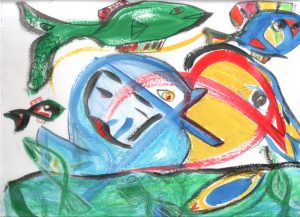
Cette gravité au sens propre et figuré, c’est le temps de la terre, avec sa rotation, ses révolutions autour du soleil. Elle n’est pas sans conséquence sur notre perception individuelle, psychologique du temps. Pour rompre ce cercle des répétitions, il importe de fixer le temps derechef dans une espèce de coup de circuit temporel. C’est ce que nous propose Fulvio Caccia dans l’Actualité, son huitième recueil, publié dans la collection » Levée d’encre », chez l’Harmattan et illustré  par son fils Damien. « L’actualité… coïncide parfaitement avec la figure que l’histoire de l’humanité fait de l’univers ». Prenant à son compte cette citation du philosophe Walter Benjamin, le poète la décline sur la surface atemporelle du poème. D’emblée le premier vers en donne le ton : il s’agira en effet de « retrouver la figure de l’Histoire ».
Car c’est elle qui, depuis la Renaissance, oriente la flèche du temps, lui imprime sa scansion. Le poète n’aura de cesse de débusquer son double, sa part cachée, ses mystères dans ses méandres. Cette perspective, entre sacré et profane, confère à ce long poème de 95 pages une place tout à fait singulière, « à contre temps du flux poétique actuel » comme le souligne l’éditeur, le poète Michel Cassir. « Administrer l’oubli ?/Tout un programme ! Et toi qui protestes comme tu peux/c’est-à-dire mal/devant les théories d’images/qui s’abattent sur toi/et font semblant/qu’elles n’ont plus de noms/

L’enjeu
Tel est bien l’enjeu : ancrer les images errantes dans leur histoire pour les libérer de leur force centrifuge, et ce, non pas seulement pour leur donner un sens, mais pour les reconnaître, c’est-à-dire, les aimer. Car le coup de circuit induit par la suspension de l’actualité est en miroir avec le coup de foudre.  Si le premier   peut avoir un rapport direct avec  l’actualité  par sa forme disruptive  Toutefois la poésie et l’actualité ont une charge électrique symétriquement inverse. L’une est positive, l’autre négative. Et vice versa. C’est pourquoi dans un contexte « normal » elles s’équilibrent. Mais aujourd’hui l’équilibre, même précaire, est rompu. Comment le rétablir ? Ce recueil réouvre une voie cachée : la troisième. qui allie éthique et esthétique, un état désormais fondé sur la culture et non plus sur  la nation.

Mais encore faut-il que ce chant puisse résonner dans le grand vacarme de l’espace public désormais numérisé. Cette voix unique sera-t-elle entendue ?    C’est tout le pari de ce papier que de permettre à ce poème… sa levée d’encre.

Parution : 18.12.2025
102 pages  13
Broché ; Format 135 x215
https://www.editions-harmattan.fr/catalogue/livre/l-actualite/80749

Compagnon de route

ViceVersa  compta un premier cercle de collaborateurs. Yves Chevrefils-Desbiolles fut de ceux-là. Lorsque sa femme Annie m’a annoncé son décès en octobre dernier, un pan de cette période   s’en est allé avec lui.

Pour ma part , je l’avais rencontré à Montréal en 1986. Ce jour-là, nous étions quelques-uns à être restés dans ma cuisine après la réunion de rédaction. Yves venait d’y publier ses premiers articles. Alors il me parla de son envie de travailler sur les revues d’art. En tant que rédacteur en chef de cette publication, j’avais eu vent lors d’une rencontre de jeunes éditeurs français qu’un collectif dédié aux revues venait d’être créé à Paris. C’était, bien sûr, l’association Ent’revues. Je l’invitai à explorer cette piste.

Cette information ne tomba pas dans l’oreille d’un sourd et quelques mois plus tard, il était parti pour Paris. Se doutait-il alors que son existence s’y déroulerait ? Il fut notre premier correspondant étranger. J’étais loin d’imaginer que je ferai de même l’année suivante !

La revue, encore une fois, en fut le prétexte et le moteur. J’avais formé le projet d’organiser une série de manifestations à Paris pour mieux faire connaître notre publication en France, mais aussi en Europe. Pourquoi pas ? N’était-elle pas déjà publiée dans trois des langues européennes : le français, l’anglais et l’italien ?

L’occasion se présenta en octobre 1987. Une semaine entière allait être dédiée aux revues à Paris. (Sans doute était-ce déjà les premières animations du collectif auquel Yves serait associé.) Il fut un précieux relais pour notre délégation. Car nous étions une bonne douzaine entre illustrateurs et rédacteurs du Québec. J’étais parti en éclaireur avec deux lourds cartons de revues, en compagnie de l’ami Nicolas Van Schendel. Ce dernier avait déjà un point de chute : l’appartement d’une ancienne camarade d’université de Montréal qui deviendra ma femme.

Or dans cet intervalle, c’est Yves qui m’accueillit. Il venait d’emménager avec Annie, sa jeune épouse, dans un double studio du 9e arrondissement. Ils m’offrirent très généreusement la chambre de bonne, juchée au sommet d’un labyrinthe improbable. J’étais exténué autant par l’organisation du voyage que par une épreuve dans ma vie personnelle. Je n’oublierai jamais l’accueil fraternel qu’Yves et Annie me réservèrent alors. Ce fut un moment de paix et de stabilité.

Mon installation à Paris me conduisit à fréquenter Yves assez régulièrement. Nous avions les mêmes projets professionnels autour de l’objet-revue et ce qu’elle représentait. Les miens étaient plus immédiats et sans doute plus utopiques. Mon idée était d’installer un bureau de ViceVersa à Paris. Je voulais en faire la tête de pont du projet transculturel de la revue. Malgré la diffusion ponctuelle du périodique en France, en Italie et en Belgique, malgré quelques colloques, cette initiative resta en plan, faute de moyens. Yves fut plus raisonnable. Il réalisa son rêve et devint historien des revues avec une belle thèse publiée en 1993 sous le titre « Les revues d’art à Paris : 1905-1940 ». Son engagement auprès de l’association Ent’revues et ensuite avec l’Institut Mémoires de l’édition contemporaine, créé par Olivier Corpet, s’amplifia. Nous nous perdîmes de vue. Il partit à Marseille avec sa femme et ses deux filles, puis en Normandie avant de revenir à Paris.

Entretemps nous avions respectivement fondé une famille. C’était en 1989. L’Europe était dans tous ses états et nous allions devenir pères ! Avec Aline, nous étions allés voir Annie et Yves à la maternité juste après la naissance d’Esther, leur fille aînée. Cette journée de la fin juillet était lumineuse. Nous avons partagé notre joie et notre excitation de devenir parents. Moments fugitifs de bonheur que parfois des photos immortalisent. Je conserve toujours à portée de main la photo qu’Yves a prise de ma femme et de moi ce jour-là. Aline est assise, enceinte. Elle porte une robe jaune clair et une blouse rouge avec des motifs. Je suis debout derrière elle en chemise blanche et aux manches retroussées, mes mains posées sur ses épaules. Nous sourions tous les deux. De la fenêtre émane une douce lumière poméridienne.

Cette photo qui pourrait sembler anodine, demeure pour moi l’une des plus belles que nous ayons de nous. Yves a su capter cet instant de grâce et de suspension qui fait tout le charme de la vie. Merci Yves.

Nick Palazzo forever

Nick Palazzo was a young , brillant self-taught Italo-Canadian painter who died of Aids at the age of 30. I had the occasion to meet him for ViceVersa magazine when he was working for the family mini-market. Between two customers, he would sketch a gesture, a person’s attitude, the corner of an urban landscape in this shopping centre in the outer suburbs of Montreal. His painting was both highly personal and universal. If there are any similarities with Bacon or Dali, it’s in the way he dismantled the Imago by returning it to its origin: the mask of death. Hence the palpable melancholy in all his canvases. Knowing that he was doomed, he captured, like no other, a certain Americanness as seen during the AIDS years, which were also, we often forget, a great moment of creativity. Nick Palazzo understood this. Despite his illness, he captured these snapshots of Montreal life in small format (18″ x 14″): the naked, abandoned bodies of his lovers and that incredibly intense northern light that crushes the urban landscape with all its weight. The article I wrote at the time was included in Painting Moments, Art, AIDS and Nick Palazzo (Guernica Editions, 1998) written by Mary Melfi and published in 1998 and then adapted for theater.  One of her readers alerted the archivist at Visual AIDS , which is dedicated to artists who have died of AIDS and provides a sad but wonderful record of the period.
Agatha DeSantis, editor and film producer, intends to make a documentary about the artist. Since his death, no gallery has given him the exhibition he deserves.


Transculturation And The Collapse Of Thought

Wanting to help edify me, an old friend who may recognise himself hastened to send me the YouTube link to a conference on Ukraine. “John Mearsheimer’s thesis, although it dates from 2016, is one hundred per cent my own,” added this friend, urging me to listen to it (you can find it on the platform). So what did this distinguished professor who had so impressed him have to say?

Russia : a lost ally
I would have been pleased to smile if the distressing banality of his remarks had not reminded me of earlier ones with far crueler consequences. But first, let’s sum them up. Ukraine, says the American strategist, is in no way of any strategic interest to the United States and he therefore proposes to “Finlandise” it to make it a buffer state. Why, he continues, should we upset Russia, a nuclear power to be reckoned with, with our NATO posturing on its own turf? What a waste it would be to throw such a precious potential ally into the arms of our worst rivals (the conference dates back to before the war!) We need Russia,” replies the good professor without batting an eyelid, “for Syria (infested, as we know, with fundamentalists, I might add). We still need Russia for Iran (to keep the mullahs in check, I might add), but above all to contain China, “our real competitor”.

Machiavel for ever
So here we are! This is pure geopolitical forecasting from this ‘expert’, where the balance of power is analysed more than summarily in the light of the only reason that counts: the reason of the strongest. This is just the ticket for the Q-Annon fundamentalists, who are heartened by Donald Trump’s recent statements. Let’s be clear. We’ve known since Machiavelli that politics is an instrument of power relations. And it is up to politicians and their advisers to use it to defend what they consider to be the general interest of their nation. On the other hand, it is up to intellectuals, who are attached to the values of democracy, to denounce them if the former use them to mask their own interests. That is, of course, if democracy has not turned into oligarchy. In this respect, John Mearsheimer, as a right-wing analyst who defends American interests tooth and nail, is fully in his role, however cynical he may be. Moreover, he is merely reinforcing an old regionalist reflex inherent in all American administrations: the Monroe Doctrine.

The intellectual responsability
But what about the intellectuals – particularly those trained in or belonging to Europe who, like my friend, have defended the diversity of cultures and the task of telling their history, the “unwritten history of the vanquished” that Walter Benjamin called for? “At the time when the Russian world wanted to remodel my little country in its own image, I formulated my ideal for Europe as follows: maximum diversity in minimum space; the Russians no longer govern my native country, but this ideal is even more in danger” wrote Milan Kundera in 2005.*

“Dishonour and  war”
Russia’s aggression towards Ukraine gives this recently deceased novelist’s observation all its sharpness and urgency. Why is this so? Because it highlights, beyond the stammering of history, the “strange defeat” (Marc Bloch) of intellectuals when they absolve themselves of their responsibility and bow to the reason of the strongest, ignoring once again “a far away country of which we know little”. These famous words by which Chamberlain, the British Prime Minister at the time of the Munich agreements in 1938, sought to justify the sacrifice of Czechoslovakia were, like the words of the American analyst, a geopolitical calculation to avoid war. Winston Churchill replied, “You wanted to avoid war even at the price of dishonour; you have dishonour and you will have war”.

The defeat of thought: an old story
The defeat of thought is not a new phenomenon; it accompanies the crisis experienced by the intellectual class at the time of the great upheavals of its era. The crisis we are experiencing has already had several avatars: from the “silence of the intellectuals” to “The defeat of thought”, the eponymous title of this article taken from Alain Finkielkraut’s 1984 book, via Allan Bloom’s The Closing of American Mind and Régis Debray’s caustic analyses of the terminal intellectual. In his latest book, La défaite de l’Occident (The Defeat of the West), Emmanuel Todd extended the defeat of thought to the whole of the old and new continents.

What are the causes of this? Back in the 1980s, Finkelkraut pinpointed the epicentre in the bi-secular duel between two concepts of nation: the ethnic idea and the elective idea of the nation. German Romanticism and French counter-revolutionaries defended the former by extolling the “national genius” and the patriotic and popular values associated with it. Individuals are the spearhead. The elective theory, on the other hand, sees the nation as a voluntary association of free individuals, an idea born of the Enlightenment and inherited by the French Revolution

The ethnic theory
The philosopher’s view can be summed up as follows: whenever the ethnic theory prevails over the elective theory, when nationalism is victorious, Europe collapses. Samuel Blumenfeld wrote in the daily Le Monde: “We thought that the elective theory of the nation had won the day after the UNESCO Constitution was drafted in 1945, taking up the ideal of the Enlightenment. But no. In 1951, Claude Lévi-Strauss wrote in Race et histoire that the text in question was guilty of Western ethnocentrism. The idea of a cutting-edge civilisation held up as a model to Third World countries. As a result, the philosophy of decolonisation translates into a regression towards the local geniuses of German Romanticism”.

The hedonism of the consumer society has accelerated its backward leap, and the urban arts, born in its bosom, have suddenly found themselves promoted to the level of the great classics, provoking a new battle between the ancients and the moderns. Social networks, which privatise public space and exacerbate individualism, have amplified this trend. As a result, the cultural diversity so dear to Kundera and the transcultural experience that we fight for have been downgraded to the point where they are no longer perceived as a value, but as an avatar of multicultural consumerism: the “United Nations of Benetton”. As Nietzsche already anticipated, this confusion and even reversal of all values has the effect of neutralising freedom of reception, i.e. critical thought. Freedom of expression, without safeguards, has become the useful idiot of authoritarian regimes.
In this respect, the responsibility of the “organic intellectual”, as Gramsci called him, is precisely to put critical thought back on track as far as possible, not as a negative thought that judges, condemns and takes sides, but as a premise for an authentic politics of recognition, i.e. a politics of balance between the general interest and particular interests.
This balance is not new; it is already implicit in Article 4 of the Declaration of the Rights of Man. The well-tempered liberal-socialism that it implies is still an unthought of concept in the political arena today. Having been phagocytised in France by Macronism, it is more than ever the new continent to be explored for the Old Continent, which is looking for a second wind in next June’s elections. Can we pull the plug on its rugged individualism and put it at the service of a well-understood social, ecological and transcultural policy. That’s the challenge of the forthcoming European elections.
A lot of work for those who once believed in the value of transcultural experience. But they must not give in to the siren calls of the extremes right or lefet or sit back and watch the train go by.

One more effort my friend…

Mary Melfy : Immigration, an inside story

Mary Melfi belongs to the last generation of Italian immigrants to Canada. In the 1950s, she arrived in Montreal and, like most of her fellow immigrants, was schooled in English. This fact was not without implications in a Quebec in the midst of an identity crisis, where Montreal’s linguistic balance became a crucial political issue. Mary Melfi was nevertheless obliged to observe these linguistic and political upheavals as she continued her journey in the English-speaking literary world, which had already been shaped by previous generations of immigrant writers. After the Scots, the Irish and the Ashkenazi Jews, it was now the turn of the Italians to make their mark on the literary scene. And Mary did so with a tenacious ingenuity that was not devoid of brilliance. Editions Guernica was on hand to support her, as its founder, Antonio d’Alfonso, is an inimitable talent scout.
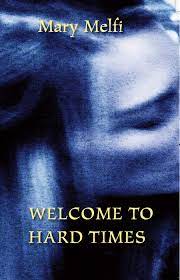
Mary Melfi soon stood out. The surrealism of her poetic universe, punctuated by abrupt phrasing and populated by surprising, lapidary images, reflects the inequalities of a society overwhelmed by progress. Over the years, she has published a dozen books, including two novels and a play. Her latest opus, Welcome to Hard Times, is no exception. The title itself is not insignificant. It refers expressly to two novels of the same name. The first, by E.L. Doctorow, was made into a film in 1967 (with Henry Fonda in the lead role); the second, by Dickens, tells the story of a devastating strike in the Manchester mills in the 19th century. It’s no coincidence that this fight against evil and exploitation is also the leitmotif of Melfi’s work. Divided into eight sections, the poems in this recent collection describe a world made even crueler and more absurd by the impoverishment brought about by hypercapitalism. ‘ Being poor is synonymous with living in the desert/with machine guns for company/Nothing Much to eat/Nothing much to do.
This is Melfi’s style. Reduced to the bone. Anger, revolt and irony run between the lines. Faced with the fears induced by the alleged excesses of multiculturalism, she asserts: “Some say such divisions are destructive. Some say my country is being destroyed-/divide a proton and see what happens!/I say: Don’t worry. But this elliptical poetry is also keen to settle accounts with God himself and his crucified son! In h
er poem The Man from Beyond Time, Superman is the Jesus Christ of the 21st century… Superman performs miracles, so does Jesus Christ/except Superman decides whom he helps out/but anyone can pray to Jesus Christ/and get Him to come round and work his magic/so Jesus Christ is the real superhero in this saga/if you ask me/. The superimposition of these scrappy phrases exudes a false naiveté that gives her writing all its aplomb and originality.                                                                     

This is particularly true of her story “Là-bas en Italie, conversation avec ma mère”, the original of which was published in 2009 by Guernica. Antonio D’Alfonso, her historic publisher, presents it with sensitivity and modesty. Reading the hundred or so columns in this editorial UFO, halfway between ethnographic document, autobiography and dramatic comedy, I can’t remain indifferent. These chronicles, born of the intertwining of two strong individualities, are also mine. More than once, I found myself, like the child I was then. They punctuate my own journey. The song “La casetta piccolina in Canada” was still on the charts when I left the port of Naples. Here’s what she had to say about that port: “Naples, city of jubilation and sorrow. A city of beginnings and endings. Can history be remade? It all depends… Do the poor weigh in the balance? Is America the biblical land of milk and honey? Is there life after death? That says it all. By tracing the thread of his own life, Melfi reveals the other, invisible, hidden side of History: the one we want to forget because it reminds us of the time when we were poor. Suddenly, this story is no longer a personal, intimate tale, a “wives’ tale”, but rather the eternal story of exile, of  generations, and through it, the story of our human condition. It is in this way that this book becomes universal. At a time when right-wing extremists around the world are thriving on denouncing immigration, everyone should read it.
Melfi succeeds in the trick of making a banal life seem moving, funny and fascinating, without ever falling into melodrama. Apparently, girls are better at this than boys. This is shown by the large number of artistic initiatives on the same theme in France and, no doubt, elsewhere in Europe. Mary Melfi was a pioneer in this field. And what a pioneer she was! Mordant, ironic and capable of self-mockery, she integrates her mother’s many recipes into her memories! Because the passing of the torch also takes place in the womb, in both senses of the word. Is i
t any wonder that this book ends with recipes for cookies?

*

In short, let’s make our amends here. Wary of the miserabilism associated with immigration and its melodramatic overtones, I was mistaken in initially classifying this book in that category. I’ve always felt that stories like this could only be told if they were the result of either exile – i.e., the impossibility of return – or tragedy. That’s why I decided from the outset to dramatize it in novels, which, alas, are nowadays plagued by bloody news stories. For me, the ” educational novel ” was the obvious way to tell this hidden story. The Polytechnique tragedy, which took place over thirty years ago in Montreal, was an eye-opener. I wanted to tell it in my own way in a novel, “La coïncidence”, published by the same Quebec publisher. It’s no coincidence. My latest novel traces the impact this tragedy had on the second generation. But will it even be audible? In these difficult times, it’s vital to restore the thread of history, large and small, as Mary Melfi has doggedly done.